Fleet & Equipment
Why Your Fleet Needs a Real Wash After an Alaska Winter
4 Min Read
Calcium chloride, road salt, and glacial silt do real damage to fleet vehicles over an Alaska winter. Here's what a proper wash actually involves and how often your trucks need one.
Why Your Fleet Needs a Real Wash After an Alaska Winter
Alaska winters do things to vehicles that no other state can quite match. Between the calcium chloride sprayed across the Glenn and the Parks, the sand and grit kicked up by every passing truck, and six months of salt baked into every panel, the trucks coming out of breakup season aren't just dirty. They're corroding in slow motion.
Most fleet managers already know this. What still surprises people is how fast the damage adds up if nobody does anything about it.
What's actually eating your trucks
State and local road crews use a mix of liquid calcium chloride, magnesium chloride, and sand to keep the highways drivable. That mix works great for traction. It's brutal on vehicles.
Calcium chloride stays wet at temperatures where regular rock salt has already dried up. That means it keeps reacting with bare metal long after normal salt spray would have gone dormant. It creeps into seams, frame rails, brake lines, electrical connectors, and anywhere else moisture can hide. The damage doesn't show up right away. By the time you see rust bubbling through the paint on a fender, the frame underneath has been compromised for a year or more.
Add in sand abrasion, glacial silt from the road shoulders, and diesel soot from the engine bay, and you've got a layer of contamination that a quick rinse at the local self serve bay isn't going to touch.
Why a regular wash doesn't cut it
The self serve bay on Knik Goose Bay is fine for keeping the windshield clear. It's not designed for the underside of a Peterbilt or the frame of a 953 track loader.
A real fleet wash hits three things a self serve can't.
The undercarriage. This is where calcium chloride hides. Without high pressure water angled up into the frame rails, suspension components, and fuel tank straps, all that chemical stays right where it can do the most damage.
The chemistry. Plain water doesn't break the bond between road salt and metal. You need an alkaline detergent designed for vehicle wash, applied at the right concentration, with enough dwell time to actually lift the grime instead of just rinsing the surface.
The volume. A pressure washer pulling 8 gallons per minute moves more water in a minute than a self serve wand does in five. That matters when you're trying to flush salt out of places you can't see.
How often is enough
For a fleet running winter routes between Anchorage, Wasilla, and points north, we recommend a thorough wash at the start and end of every winter at a minimum. Once in October before the first real storm coats everything, and once in April or May to flush out the season's accumulation.
Fleets that wash monthly through the worst of winter see noticeably less corrosion and fewer electrical gremlins down the road. The trucks also hold their resale value better, which matters when it's time to cycle out older equipment.
Heavy equipment is a different calculation. A loader that lives at the same gravel pit all winter isn't picking up road chemicals, but it is collecting hydraulic fluid mist, fines, and whatever material it's moving. Equipment washing is more about keeping inspection points visible and preventing hydraulic seal damage than fighting corrosion.
What a real fleet wash actually looks like
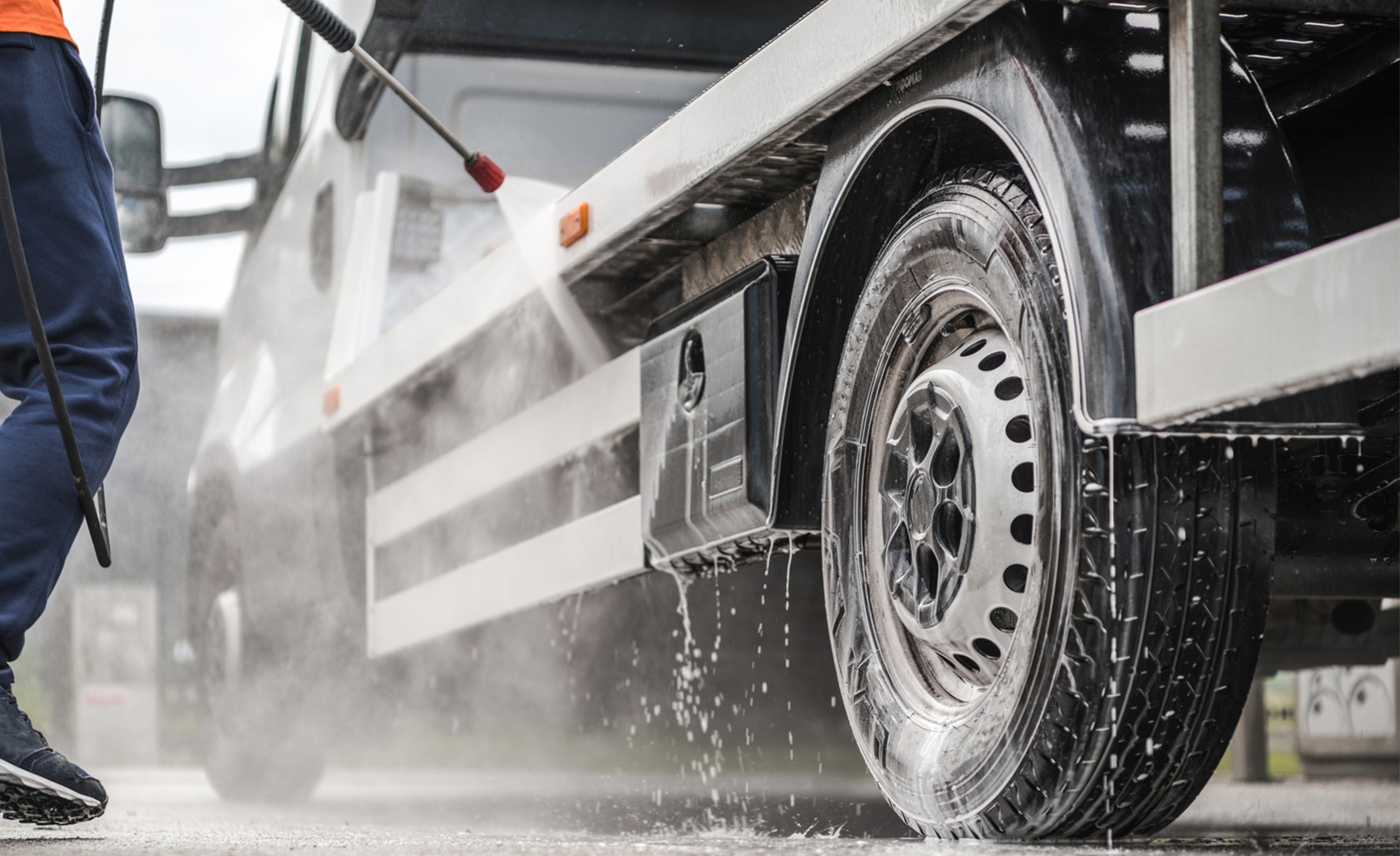
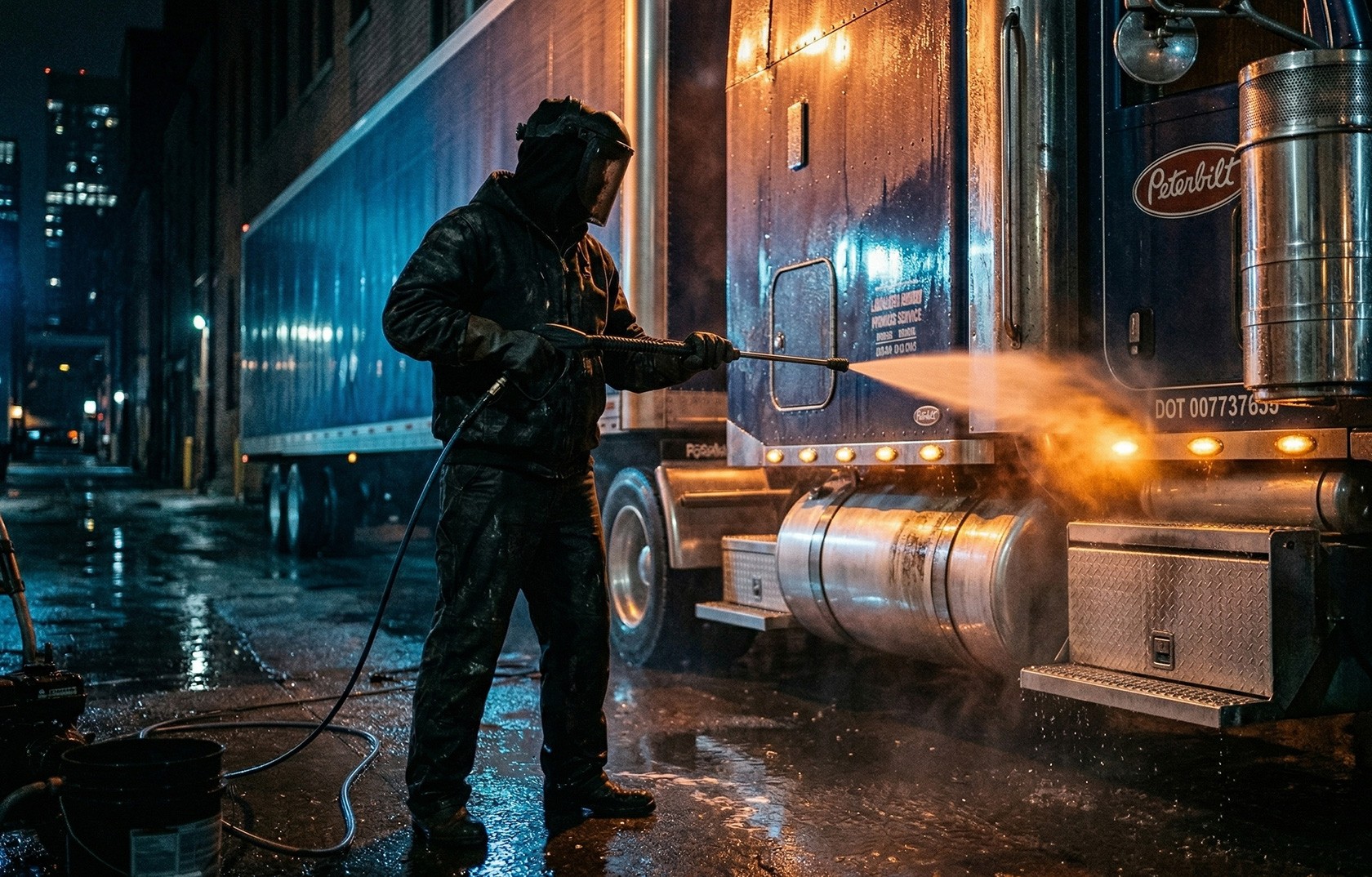
When we roll up to a yard with the rig, here's what's happening. We're pulling 3,500 PSI at 8.5 gallons per minute through a system built for this exact kind of work, which means we can run a two step chemical wash without leaving streaks or etching paint. The pre soak loosens road film. The detergent breaks the salt bond. The rinse flushes everything out, including up under the frame.
The whole process takes anywhere from 15 minutes for a pickup to about an hour for a full tractor trailer. We bring our own water and we capture our wash water for proper disposal, which keeps your yard in compliance with Alaska DEC requirements and saves you from worrying about runoff.
What it costs
Most fleet managers are surprised at how reasonable a contract wash schedule turns out to be, especially when you factor in what corrosion is already costing them in repairs, downtime, and resale value. A fleet of ten trucks washed twice a month through the winter usually comes out to less than the cost of a single frame rail repair.
If you're running a fleet anywhere in the Mat-Su Valley or Greater Anchorage and you want to talk through what a wash schedule would look like for your operation, give us a call. We'll come walk your yard, look at your equipment, and put together a quote that actually makes sense for your operation.
Join our newsletter list
Sign up to get the most recent blog articles in your email every week.