Fleet & Equipment
The Five Layers of Filth on Your Truck
4 Min Read
What's actually on your truck right now, layer by layer. From road dust to permanent corrosion, here's what comes off when you finally wash a truck that's been ignored all winter.
The Five Layers of Filth on Your Fleet Truck
A clean truck doesn't tell you anything. You see what you expect to see. Paint, chrome, clean glass, and your brain moves on.
A truck that hasn't been washed all winter tells a story. It's a six month record of every mile that truck drove, every chemical it picked up, every gravel shoulder it kicked up onto itself. When we start washing it, that story comes off in layers, in roughly the order it went on.
Here's what's actually there.
Layer one: surface dust and dry mud
This is the layer you can see. Road dust, dried mud from the last week or two, some bug splatter on the front clip. This layer rinses off with plain hot water at the right pressure. On most trucks it's a couple pounds of material that mostly just got suspended in the air around any unsealed road and landed on whatever was nearby.
This is also the layer that makes people think their truck is dirty. It isn't. The truck is dirty under this layer. This part is just the surface.
Layer two: diesel soot and exhaust film
Pull the surface dust off and you find a thin black film coating the back half of the truck, the wheel wells, and anything behind the exhaust pipes. This is partially burned diesel mixed with airborne moisture that landed and dried in place.
You can't get this off with water alone. It needs a detergent because the petroleum base bonds to paint and chrome in a way water can't break. This is the layer that makes white trucks look gray and gray trucks look brown. It's also the layer that, on a long enough timeline, starts to permanently stain the paint if nobody touches it.
Layer three: salt and calcium chloride crust
Here's where things get serious. Under the diesel film, especially on the lower panels, inside the wheel wells, and along the frame rails, you'll find a salt crust that looks almost like a thin coat of cement.
This is the layer that actively damages the truck. Calcium chloride in particular is hygroscopic, which means it pulls moisture out of the air and holds it against bare metal. As long as that crust is there, the steel under it is wet at a chemical level even when the surface looks bone dry.
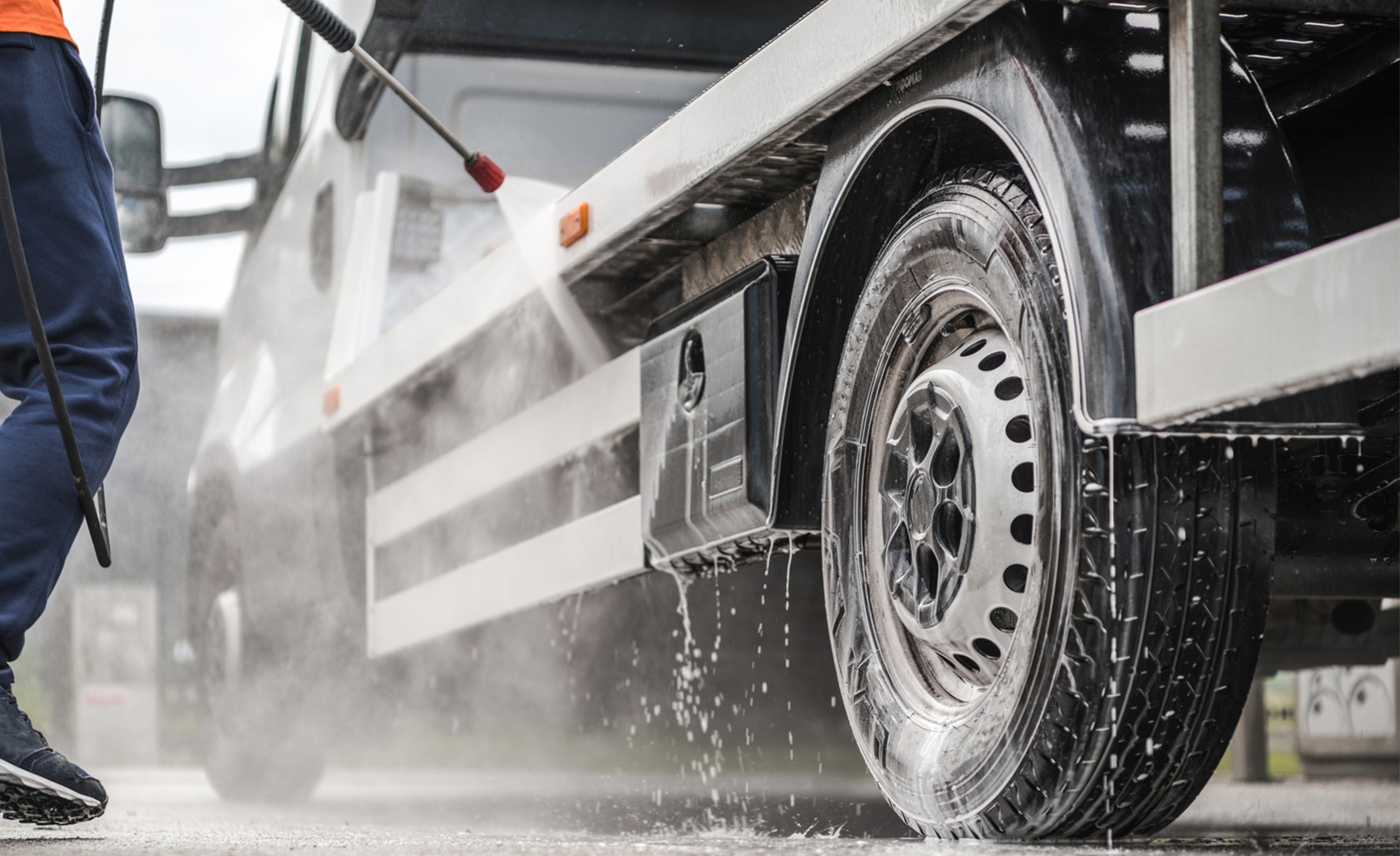
We hit this layer with an alkaline detergent that breaks the salt bond, let it dwell, and rinse with enough volume to actually flush the salt off the truck instead of just moving it to a different spot. The water coming off at this stage is usually visibly cloudy and slightly chalky. That's the chemistry working.
Layer four: undercarriage gunk
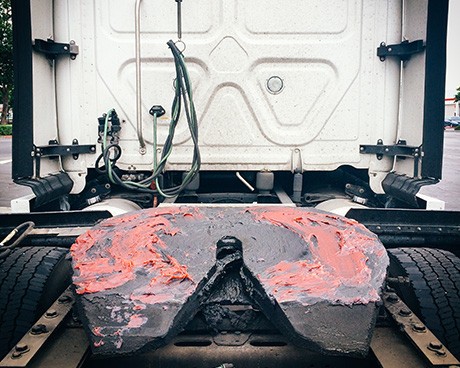
Now flip the angle and look up. The undercarriage is where everything that ever splashed up off a road in the last six months still lives. Calcium chloride, oil drips, transmission fluid mist, road tar, gravel embedded in greasy buildup, and a black asphalt-like material that's basically all of the above pressure-bonded together by miles of vibration.
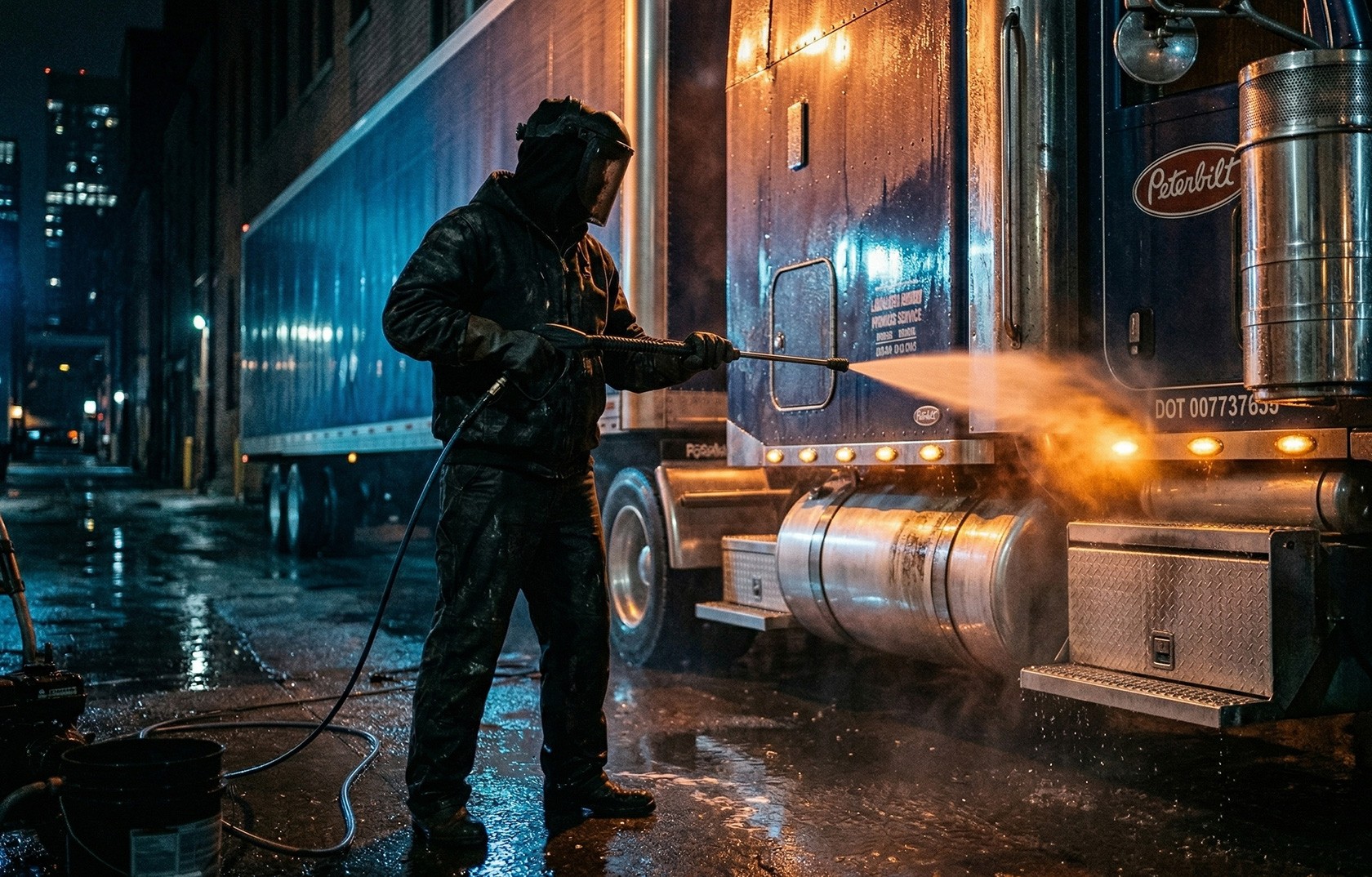
This is the layer most washes skip entirely because it requires specific equipment to get water angled up into the frame. The self serve bay on Knik Goose Bay isn't going to do this. A regular automatic wash tunnel isn't going to do this. This layer requires a power washer that can put pressurized water exactly where the contamination is hiding, which means a wand operated by hand at the right angle by someone willing to lay on the ground.
The amount of material that comes off the undercarriage of a winter fleet truck is genuinely surprising the first time you see it. It's not unusual to flush several pounds of solid material out of one truck's frame and suspension components in a single wash.
Layer five: the dirt you can't fully remove
Some contamination is permanent. Pitting in the paint, rust scale that's already eaten into the frame coating, road tar that's chemically bonded to plastic trim. Once it's there, it's there.
The point of a wash schedule isn't to undo the damage that's already happened. The point is to stop adding to it. Every week the calcium chloride stays on the truck, more steel goes from "exposed to a corrosive chemical" to "permanently damaged by a corrosive chemical." Most of the trucks we see could have been saved a year of corrosion if someone had washed them properly six months earlier.
What this means for your fleet
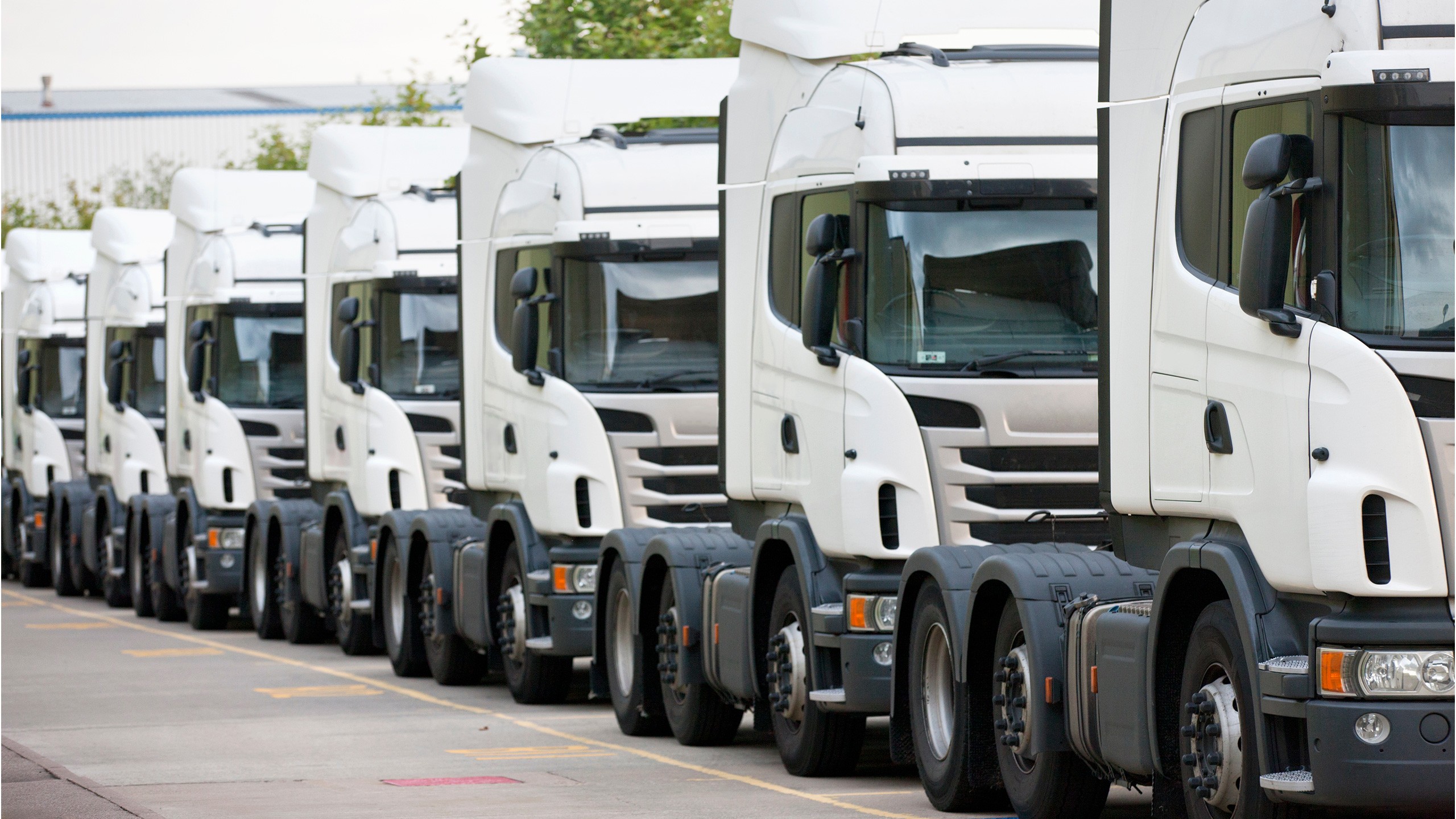
If you've got a fleet that hasn't been washed in months, your trucks are dirtier than you think. The visible dirt is the smallest part of the story. What's actually causing problems is the stuff you can't see, hiding in places you can't easily reach, doing damage that won't show up on the books until next year or the year after.
The good news is that almost all of it comes off if you hit it with the right equipment, the right chemistry, and enough volume. The bad news is that none of it comes off on its own, and waiting longer just makes the next wash harder.
If you want us to come take a couple layers off your fleet, give us a call. We'll show you what comes off.
Join our newsletter list
Sign up to get the most recent blog articles in your email every week.